Hospital Management Software in Riyadh, Saudi Arabia
Smarter Hospital Operations. Connected Departments. Better Patient Experiences.
Running a modern hospital requires efficient coordination between reception, doctors, nurses, laboratories, pharmacies, billing teams, and administration. Nizi Solutions offers Hospital Management Software designed to help healthcare providers organize these activities through a centralized digital platform.
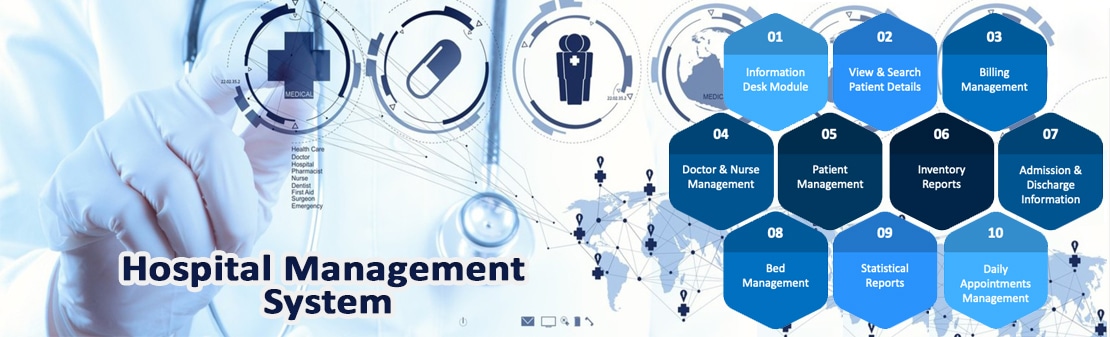
Our Hospital Management System (HMS) can help hospitals, medical centers, multispecialty clinics, and healthcare groups manage patient registration, appointments, electronic medical records, inpatient and outpatient services, billing, pharmacy inventory, laboratory workflows, and operational reporting.
Moreover, we understand that every healthcare organization has different requirements. That is why Nizi Solutions offers flexible pricing plans, configurable software modules, and multilingual options for small clinics, medium-sized hospitals, and large healthcare enterprises in Riyadh and across Saudi Arabia.


What Is Hospital Management Software?
Hospital Management Software is an integrated healthcare administration system that helps medical facilities manage patient information, clinical workflows, appointments, admissions, billing, pharmacy operations, laboratory services, and administrative activities.
Instead of relying on disconnected spreadsheets, paper files, and separate departmental systems, healthcare providers can use a centralized platform to improve information flow and coordinate daily operations.
For hospitals in Riyadh, this can support better coordination between outpatient departments (OPD), inpatient departments (IPD), emergency services, diagnostic departments, pharmacies, and finance teams.
Nizi Solutions can help healthcare organizations evaluate a system configuration that fits their facility size, workflow requirements, staffing structure, and available budget.
Who Can Use a Hospital Management System?
A hospital management solution can be suitable for:
-
Small hospitals and community healthcare facilities.
-
Medium-sized hospitals and multispecialty medical centers.
-
Large private hospitals and healthcare groups.
-
General and specialist clinics.
-
Day surgery and outpatient facilities.
-
Diagnostic centers and laboratories.
-
Hospital pharmacies and dispensaries.
-
Healthcare organizations operating multiple branches.
Consequently, facilities can select the modules relevant to their operations instead of implementing every department at once.
Essential and Advanced Hospital Management Software Modules
1. Patient Registration and Management
Create and maintain organized patient profiles from the first visit. In addition, authorized staff can access relevant demographic details and visit history to support more efficient registration and administration.
-
Patient registration and unique patient IDs
-
Patient contact and emergency details
-
National ID or Iqama information fields, where appropriate
-
Patient visit history
-
Duplicate patient record checks
-
Patient document management
-
Patient search and record retrieval
2. Appointment Scheduling and Queue Management
Improve appointment coordination between patients, reception staff, and healthcare professionals. Consequently, hospitals can organize daily schedules and help manage waiting-room activity.
-
Doctor and department schedules
-
Appointment booking, cancellation, and rescheduling
-
Walk-in patient registration
-
Queue and token management
-
Waiting-time tracking
-
Appointment reminders
-
No-show and appointment history reports
3. Electronic Medical Records (EMR)
Maintain structured clinical records that authorized healthcare professionals can review during patient care. Furthermore, organized records help clinicians follow previous visits and document ongoing treatment.
-
Medical history and allergies
-
Clinical notes and examination findings
-
Diagnoses and treatment plans
-
Medication and prescription history
-
Vital signs and observations
-
Laboratory and radiology results
-
Referral and follow-up records
-
Configurable clinical templates
Clinical records should be reviewed and maintained by qualified healthcare professionals. Software supports documentation and workflows; it does not replace professional medical judgment.
4. Outpatient Department (OPD) Management
Coordinate outpatient services from registration through consultation and billing. As a result, reception, doctors, nurses, and billing staff can work through a more consistent process.
-
OPD registration and visit records
-
Department and specialist scheduling
-
Consultation documentation
-
Doctor assignment
-
Diagnostic service requests
-
Follow-up appointment scheduling
-
OPD billing and reporting
5. Inpatient Department (IPD) Management
Manage admissions, bed allocation, patient transfers, and discharge workflows across inpatient wards.
-
Patient admission and discharge records
-
Ward and bed availability
-
Bed allocation and transfer history
-
Attending doctor assignment
-
Daily inpatient service records
-
Discharge summaries
-
Inpatient billing coordination
-
Admission and occupancy reports
6. Emergency Department Management
Support the administrative coordination of emergency services through structured patient registration and encounter records.
-
Emergency patient registration
-
Arrival time and encounter documentation
-
Initial assessment and triage records
-
Emergency department assignment
-
Diagnostic and treatment orders
-
Patient transfer and admission records
-
Emergency department activity reports
Emergency workflows must be configured around the hospital’s clinical protocols and approved procedures.
7. Hospital Laboratory Information System (LIS)
Coordinate laboratory requests, specimen tracking, results, and reporting through a structured workflow.
-
Laboratory test catalog
-
Electronic test requests
-
Specimen identification and tracking
-
Test status monitoring
-
Result entry and validation
-
Authorized result approval
-
Laboratory report generation
-
Integration with supported laboratory analyzers, where available
8. Radiology and Diagnostic Imaging Management
Organize imaging requests and reporting activities to improve coordination between doctors and diagnostic teams.
-
Radiology orders and scheduling
-
Imaging examination records
-
Reporting workflow
-
Radiologist assignment
-
Imaging result documentation
-
Referral and report history
-
PACS and DICOM integration options, subject to compatibility
9. Hospital Pharmacy Management
Manage medicines, prescriptions, dispensing records, and pharmacy stock through an organized workflow.
-
Medicine catalog and product categories
-
Prescription processing
-
Dispensing records
-
Batch and expiry date tracking
-
Stock balance monitoring
-
Minimum stock alerts
-
Supplier and purchase records
-
Purchase returns and stock adjustments
-
Pharmacy sales and billing, where applicable
Appropriate access controls and dispensing procedures should be established to support safe medication handling.
10. Hospital Billing and Financial Management
Coordinate patient billing and payment records across hospital departments.
-
OPD and IPD billing
-
Consultation and procedure charges
-
Service and package pricing
-
Invoice and receipt generation
-
Partial payment and outstanding balance tracking
-
Refund and adjustment records
-
Department-wise revenue reports
-
Accounting integration options
11. Health Insurance and Claims Management
Organize insurance information and claim-related workflows for facilities that serve insured patients.
-
Insurer and payer records
-
Patient policy details
-
Eligibility verification workflow, where integrated
-
Pre-authorization tracking
-
Claim preparation and submission status
-
Rejection and resubmission records
-
Claim reconciliation
-
Payer-wise financial reports
Saudi-specific consideration: NPHIES is Saudi Arabia’s national platform for health information and insurance exchange. Its technical and operational requirements should be assessed when planning insurance workflows or integrations. The presence of a claims module alone does not mean the software is connected to NPHIES or approved for its use.
12. Nursing and Ward Management
Help nursing teams coordinate routine documentation and ward activities.
-
Nursing assessment records
-
Vital signs documentation
-
Nursing notes and observations
-
Care plan documentation
-
Medication administration records, where implemented
-
Ward handover documentation
-
Patient monitoring charts
-
Nursing task lists
13. Operation Theatre Management
Organize surgical schedules and related operational records.
-
Operation theatre scheduling
-
Procedure and surgery records
-
Surgical team assignments
-
Pre-operative checklist documentation
-
Theatre availability
-
Post-operative documentation
-
Consumable and equipment tracking
-
Surgery utilization reports
14. Human Resources and Staff Scheduling
Coordinate healthcare staffing and administrative activities across departments.
-
Doctor and employee profiles
-
Department and designation records
-
Shift scheduling
-
Attendance tracking
-
Leave management
-
Staff credential and document expiry reminders
-
Training records
-
Payroll integration options
15. Medical Equipment and Asset Management
Track hospital equipment and selected operational assets.
-
Equipment inventory
-
Asset assignment and location
-
Preventive maintenance schedules
-
Repair and service history
-
Calibration records, where applicable
-
Equipment downtime tracking
-
Maintenance cost reports
16. Hospital Inventory and Procurement
Connect purchasing and inventory processes to the hospital’s operational needs.
-
Medical supplies and consumables
-
Purchase requisitions and purchase orders
-
Supplier management
-
Goods receiving
-
Warehouse stock balances
-
Batch and expiry tracking
-
Department-wise stock issuance
-
Reorder alerts
-
Stock movement and valuation reports
17. Patient Portal and Digital Communication
Depending on the selected implementation, patient-facing features may help patients access selected services without visiting the reception desk for every task.
-
Online appointment requests
-
Appointment reminders
-
Selected report access
-
Invoice and payment information
-
Follow-up scheduling
-
Patient feedback forms
-
Secure communication options
The availability of online payments, patient accounts, and clinical document access depends on the implemented portal and its security design.
18. Hospital Dashboards and Analytics
Provide managers with a consolidated view of hospital operations and financial performance.
-
Patient visit and admission summaries
-
Appointment and waiting-time trends
-
Bed occupancy reports
-
Department-wise activity
-
Laboratory turnaround metrics
-
Pharmacy inventory and expiry reports
-
Revenue and outstanding balances
-
Insurance claim status
-
Staff utilization and operational indicators
19. Multilingual Interface and Localization
Support a diverse workforce and patient population through configurable language options.
-
Arabic and English interface options
-
Arabic right-to-left layouts, where supported
-
Localized forms and report templates
-
Configurable date and currency formats
-
Additional languages according to requirements
-
Department-specific terminology
20. Integration, Security, and Auditability
Modern hospital systems need to connect departments while protecting sensitive information.
-
Role-based access permissions
-
User activity logs
-
Authentication and session controls
-
Backup and recovery arrangements
-
Secure API integration options
-
Supported HL7 or FHIR interoperability options, where implemented
-
Laboratory, imaging, and accounting integrations
-
Configurable retention and access policies
These capabilities must be evaluated against the hospital’s technical architecture, deployment model, and regulatory requirements.
Benefits of Implementing Hospital Management Software
A well-designed hospital management system can help healthcare facilities improve operational consistency, strengthen administrative oversight, and make information easier to access for authorized staff.
Reduce Administrative Workload
Automate repetitive tasks such as appointment scheduling, registration, billing, and routine reporting. Consequently, administrative teams can spend less time on paperwork and more time supporting patients and clinical departments.
Improve Coordination Between Departments
Connect relevant workflows across reception, doctors, nursing, laboratory, pharmacy, and finance. As a result, authorized teams can work with more consistent information and fewer disconnected records.
Maintain More Organized Patient Records
Centralized electronic records help authorized professionals retrieve relevant patient history and document encounters more consistently. In addition, structured records can support continuity of care when configured appropriately.
Strengthen Billing and Revenue Visibility
Track patient charges, payments, outstanding balances, and insurance claim status. Therefore, finance teams can review transactions more efficiently and identify records requiring follow-up.
Improve Pharmacy and Inventory Control
Monitor stock balances, expiry dates, medicine dispensing records, and replenishment requirements. Consequently, pharmacy teams can make more informed stock management decisions.
Support Better Management Decisions
Consolidated reports help administrators evaluate patient volumes, department activity, resource utilization, and financial performance. Moreover, accurate reporting can reveal areas that deserve operational attention.
Strengthen Information Governance
Configurable permissions, access logs, and data management controls can help organizations protect sensitive patient information. However, effective privacy and security also require appropriate policies, staff training, and technical safeguards.
Hospital Management Software for Healthcare Providers in Riyadh
Riyadh’s healthcare market includes private hospitals, specialist medical centers, outpatient facilities, diagnostic services, and larger healthcare organizations. These providers may have different requirements for clinical records, patient administration, insurance processing, and operational reporting.
Nizi Solutions can discuss configurations tailored to the following healthcare settings.

Private Hospitals
Coordinate OPD, IPD, appointments, admissions, billing, pharmacy, and diagnostic workflows through an integrated system configuration.

Medical Centers and Specialist Clinics
Manage doctor schedules, consultations, patient histories, prescriptions, follow-up appointments, and billing.

Diagnostic and Laboratory Centers
Organize test requests, specimen tracking, result entry, report approval, and laboratory inventory.

Hospital Pharmacies
Track medicine stock, batch details, expiry dates, prescriptions, dispensing records, and replenishment needs.

Multi-Branch Healthcare Groups
Coordinate selected administrative, financial, and operational information across branches, with permissions and reports configured to the organization’s structure.
Arabic and English Hospital Management Software
Healthcare facilities in Riyadh may serve patients and employ professionals from different linguistic backgrounds. Therefore, localization can be an important part of selecting a hospital management system.
Nizi Solutions can discuss Arabic and English language requirements for the selected modules and implementation.
Localization Features to Consider
-
Arabic and English interface options
-
Right-to-left Arabic screen layouts
-
Arabic and English patient forms
-
Localized reports and document templates
-
Configurable date and currency formats
-
Support for additional languages where agreed
-
Consistent terminology across clinical and administrative modules
Language support should be confirmed for the specific screens, reports, and integrations required by your facility.
Saudi Healthcare Integration and Regulatory Considerations
A hospital management system intended for use in Saudi Arabia should be assessed against relevant healthcare information exchange, insurance, privacy, and digital health requirements.
Saudi Arabia’s National Health Information Center provides national health information exchange services through NPHIES, alongside healthcare interoperability specifications and other digital health initiatives.
For hospitals in Riyadh, relevant implementation considerations include:
-
NPHIES integration: Assess the required insurance and health information exchange workflows, eligibility, and technical connectivity.
- Patient information privacy: Design access permissions and data handling processes around applicable privacy requirements, including the Saudi Personal Data Protection Law (PDPL).
Privacy and Information Confidentiality
-
Healthcare interoperability: Evaluate applicable national data exchange specifications and the compatibility of existing laboratory, imaging, and clinical systems.
- Medical coding: Confirm the applicable Saudi medical coding and licensing requirements for the facility’s intended activities.
-
Digital health system registration or approval: Verify any applicable requirements with the relevant Saudi authorities before deployment. The National Health Information Center provides resources for health information systems and digital health solutions.
A Practical Approach to Compliance
Nizi Solutions should assess the required integrations, technical specifications, hosting arrangements, and security controls during project planning. In addition, the hospital should confirm its regulatory obligations with the relevant authorities and qualified compliance professionals.
Important: Purchasing hospital management software does not, by itself, establish regulatory compliance, NPHIES connectivity, government approval, or accreditation. Any such capability must be confirmed for the specific product version and implementation.
Why Choose Nizi Solutions for Hospital Management Software?
Selecting a hospital information system is an important decision because it affects daily workflows across multiple departments. Nizi Solutions offers software development and business management solutions, with configurable options to help healthcare organizations assess their operational requirements.
Flexible Pricing Plans
Discuss a package based on your facility size, required modules, users, and implementation budget.
Solutions for Every Business Size
Explore essential modules for small clinics, broader workflows for medium-sized hospitals, and configurable solutions for larger healthcare groups.
Modular Implementation
Prioritize the departments and workflows your organization needs, subject to technical feasibility and the agreed project scope.
Multilingual Options
Discuss Arabic, English, and other language requirements, including right-to-left presentation where supported.
Customization and Integration Options
Evaluate clinical workflows, reports, third-party integrations, and departmental requirements according to your facility’s needs.
Hospital Software for Small Healthcare Facilities
Small hospitals and clinics may need patient registration, appointment scheduling, electronic records, consultation billing, and basic reporting. An essential package can provide a structured foundation without requiring a complex enterprise deployment.
Hospital Software for Medium-Sized Hospitals
Medium-sized facilities may need OPD and IPD management, laboratory workflows, pharmacy inventory, insurance processing, and departmental reporting. Consequently, a broader configuration can help coordinate more complex operations.
Enterprise Hospital Management Solutions
Large hospitals and healthcare groups may require multiple branches, advanced user permissions, extensive reporting, specialized departmental workflows, and integrations with existing clinical and financial systems. These requirements should be assessed individually.
Flexible Hospital Management Software Pricing
Nizi Solutions offers flexible pricing discussions to help healthcare providers choose a solution that fits their needs and budget.
Essential Plan
For small clinics and healthcare facilities
-
Patient registration
-
Appointment scheduling
-
Basic medical records
-
Consultation billing
-
Standard reports
Professional Plan
For growing hospitals and medical centers
-
OPD and IPD workflows
-
Laboratory and pharmacy modules
-
Expanded billing and inventory management
-
Department-level reports
-
Configurable user permissions
Enterprise Plan
For large hospitals and healthcare groups
-
Multi-branch management
-
Advanced reporting and analytics
-
Extended integration options
-
Custom workflows and permissions
-
Enterprise implementation planning
These are suggested package structures, not published prices or confirmation that every feature is included. Actual functionality, pricing, and availability depend on the selected solution and agreed scope.
Request a Customized Quote
What Determines the Cost?
The total investment may depend on:
-
Number of departments, users, and branches
-
Required clinical and administrative modules
-
Patient data migration requirements
-
Arabic localization and document templates
-
Laboratory, radiology, pharmacy, and accounting integrations
-
Insurance and NPHIES integration requirements
-
Hosting, security, training, and support arrangements
Therefore, a requirements assessment can help determine which functions are essential and which can be introduced later.
Frequently Asked Questions
1. What is Hospital Management Software?
Hospital Management Software is a digital system that helps healthcare facilities manage patients, appointments, clinical records, admissions, billing, pharmacy, laboratories, and administrative activities through connected workflows.
2. Is Nizi Solutions Hospital Management Software suitable for Riyadh?
The solution can be assessed for hospitals, medical centers, clinics, and diagnostic facilities operating in Riyadh. Its suitability depends on the required modules, integrations, and applicable healthcare requirements.
3. Can the software manage OPD and IPD?
OPD and IPD workflows can be included according to the selected implementation, covering outpatient visits, inpatient admissions, bed allocation, transfers, and discharge documentation.
4. Does the system support electronic medical records?
Electronic medical record capabilities can include patient histories, diagnoses, clinical notes, prescriptions, laboratory results, and follow-up records, subject to the selected modules and clinical workflow design.
5. Can the software manage hospital pharmacy and laboratory operations?
Pharmacy and laboratory modules can be configured to manage medicine inventory, prescriptions, test requests, specimen tracking, results, and related reporting. Supported integrations must be confirmed separately.
6. Does the system support health insurance claims in Saudi Arabia?
Insurance-related workflows can be assessed for payer records, authorizations, claim preparation, and reconciliation. NPHIES connectivity and any required approval must be verified for the specific implementation.
7. Is Arabic language support available?
Arabic and English localization can be discussed, including right-to-left interface presentation and localized documents where supported. Confirm coverage for your required modules before implementation.
8. Can the system support multiple hospital branches?
Multi-branch capabilities can be configured according to the selected solution. These may include consolidated reports, branch-level permissions, and centralized administrative oversight.
9. Does the software comply with Saudi healthcare regulations?
Compliance depends on the product configuration, deployment, integration scope, and the facility’s obligations. Applicable PDPL, health information exchange, coding, and digital health requirements should be verified with the relevant authorities.
10. How much does Hospital Management Software cost in Riyadh?
Pricing depends on the facility size, users, modules, customization, integrations, and deployment requirements. Nizi Solutions offers flexible pricing discussions for small, medium-sized, and enterprise healthcare organizations.
11. Can the software integrate with existing hospital systems?
Potential integrations with laboratory analyzers, imaging systems, accounting software, insurance platforms, and other clinical systems can be assessed based on available interfaces and technical compatibility.
12. How can I request a software demo?
Visit Nizi Solutions to discuss your hospital’s requirements and request a suitable demonstration or quotation.
Transform Hospital Operations with Nizi Solutions
A Smarter Way to Manage Your Healthcare Facility
Your hospital team should be able to focus on delivering organized, patient-centered services rather than struggling with disconnected records and repetitive administrative processes.
Nizi Solutions can help you explore Hospital Management Software tailored to your operational requirements, from patient registration and appointment management to billing, pharmacy, laboratory workflows, and hospital reporting.
Whether you operate a small medical center, a growing private hospital, or a large healthcare group in Riyadh, you can discuss a solution that fits your budget and growth plans.